Direct culture-based detection of Vibrio cholerae in 100 mL water samples
What is the Innovation
Aquagenx has developed direct culture-based detection of Vibrio cholerae in 100 mL water samples using modified alkaline peptone water and our GEL technology and method in clear plastic bags.
In our formulation, the modified alkaline peptone water/powder medium contains inhibitors to suppress non-V. cholerae bacteria but allows V. cholerae to grow. Powder gelling materials solidify at room temperature within 1-3 minutes.
Description of Technology
Modified alkaline peptone water is added into 100mL water sample and enriched at 35°C for 4-5 hours. After enrichment, a specific powder medium (GEL V. cholerae) is added into the enriched sample and poured into a plastic GEL Bag containing our GEL Powder. The plastic GEL Bag will incubate at 35°C for up to 36 hours after mixing thoroughly with the palm of the hand.
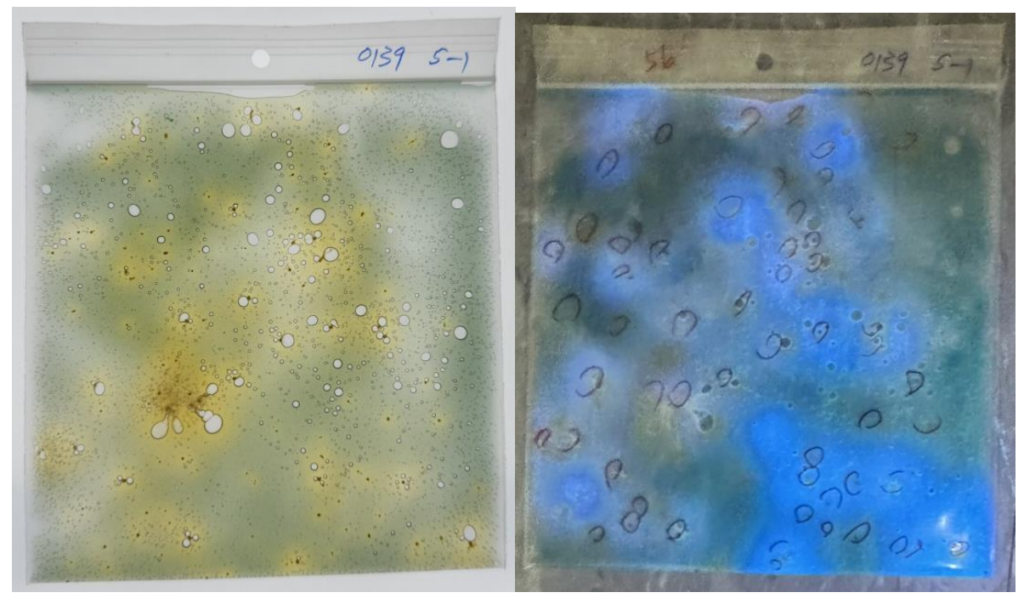
At 24 hours incubation, fluorescent colonies can be observed under a UV light (365 nm) for presumptive V. cholerae. If fluorescent colonies also show yellowish color under ambient light at 36 hours incubation, it will confirm the identity as V. cholerae.
Why the Technology is Innovative
The method developed is ready-to-use without any laboratory preparation and can be done on-site in the field outside of labs. It is a simple two-step procedure that requires little training with comparison to the US EPA MPN method for V. cholerae.
Our method entails pre-enrichment (4 hours) using modified alkaline peptone powder and then dissolution of our powdered V. cholerae test medium in the same sample bag, after which the mixture is poured into a clear plastic GEL Bag containing instant gelling materials.
The Aquagenx method is more accurate and specific to detect V. cholerae by a dual detection system (fluorescent and yellowish colonies) compared to the EPA MPN method that only relies on detection yellowish colonies.
When we begin our second round of field testing, we will determine if we can commercialize a 20mL test that provides Presence/Absence test results or a 100mL test that provides Colony Forming Units test results.
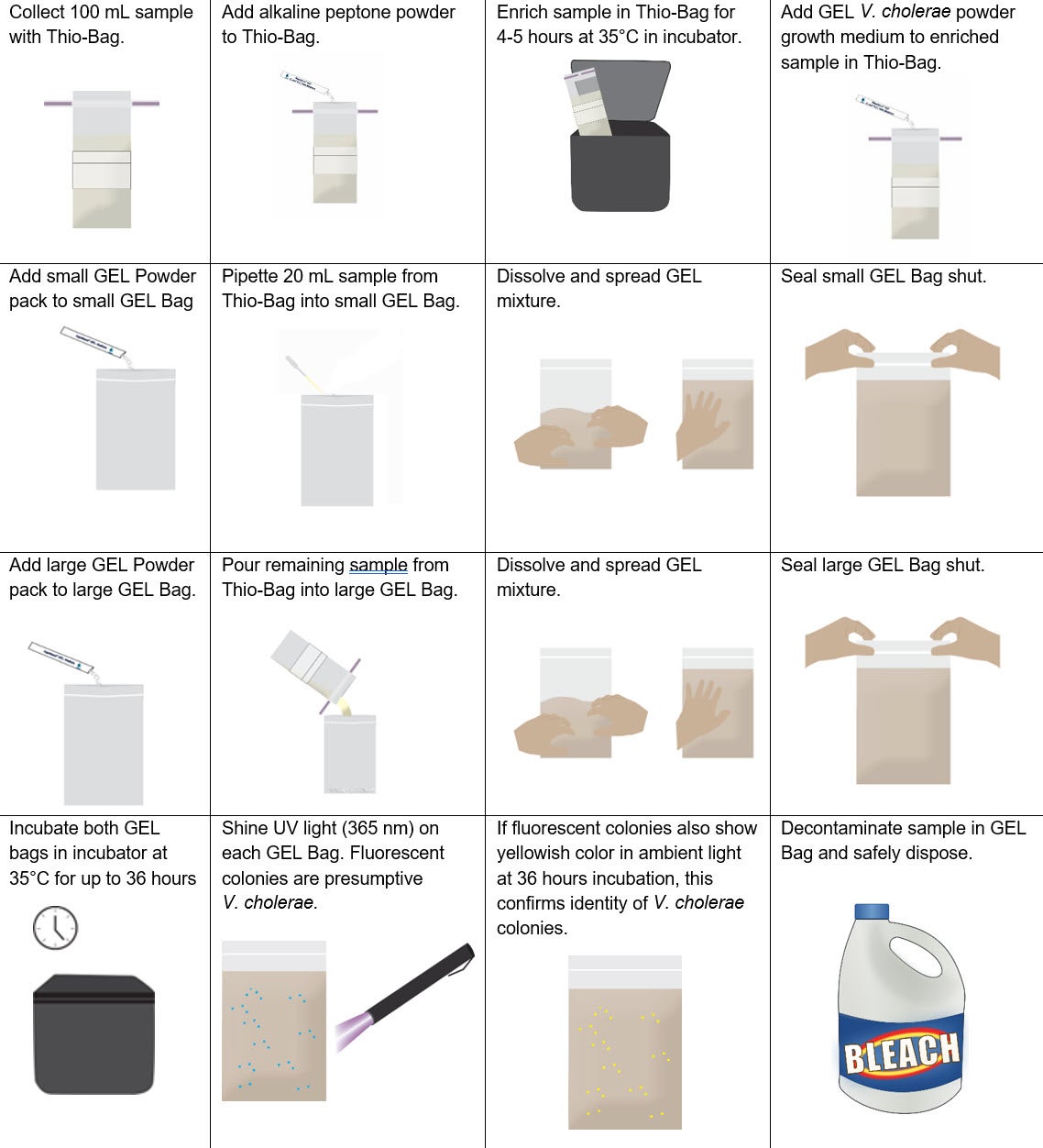
Image of 20mL enrichment samples. LEFT: Yellow and fluorescent colonies of V. cholerae strain O139 enriched for 5 hours. RIGHT: Observed after 36 hours incubation on the right.