Culture-Based Water Quality Tests Remain Essential
In the water, sanitation, and hygiene (WASH) sector, there are new microbial water quality testing technologies and innovations. These innovations are largely around devices or different processes such as Next Generation Sensors (NGS), Adenosine triphosphate (ATP), immunoassays, Tryptophan-Like Fluorescence (TLF) and biomarkers, and quantitative polymerase chain reaction (qPCR) devices.
These largely molecular methods provide faster detection and broader microbial profiling. They can collect and analyze multiple water samples for molecular evidence of E. coli and other bacteria, and in some cases provide near-real-time, quantified test results. Some are capable of continuous automated incubation and analysis with remote control functions. The key new feature is test results are generated in substantially less time than previous testing methods.
Despite these advanced water quality testing technologies, culture-based testing methods are still essential in the WASH sector. Following is why.
While new technologies are of growing interest, each of them currently has different limitations. Some of the new devices cannot distinguish viable bacterial cells from dead cells, therefore they do not detect and quantify live, culturable, and infectious microbes such as fecal indicator bacteria like E. coli. This limitation risks an increased number of false positive test results, or an overestimation of microbial concentrations. Molecular methods can overestimate risks in treated water, such as after chlorination or UV disinfection where pathogens are inactivated but DNA persists.
International drinking water quality standards still rely on culture-based testing methods, including accepted methods for the U.S. EPA Revised Total Coliform Rule, and the WHO Guidelines for Drinking Water Quality:
It is important to recognize that the different methods measure different proper ties of microorganisms. Culture-based methods detect living organisms, whereas microscopy, detection of nucleic acid and immunological assays measure the physical presence of microorganisms or components of them, and do not necessarily determine if what is detected is alive or infectious. This creates greater uncertainty regarding the significance of the human health risk compared with detection by culture-based methods. When using non-culture methods that do not measure in units indicative of culturability or infectivity, assumptions are often made about the fraction of pathogens or components detected that represent viable and infectious organisms (WHO Guidelines for Drinking Water Quality, fourth edition incorporating the first and second addenda, 2022, page 160).
In addition, some non-culture methods can only measure sample sizes less than 100 mL, which is the volume level recommended by the World Health Organization. Other systems are not field portable, or need components that require decontamination before reuse, or require electricity, or the use of precise incubation temperatures, or specialized equipment, or highly trained analysts.
In contrast, culture based tests such as Aquagenx CBT EC+TC Kits, GEL EC CFU Kits and AMR ESBL E. coli Kits are field ready, easy for anyone to learn to use, and contain minimal, lightweight components. They provide outstanding feaures and benefits for water quality testing in the field.
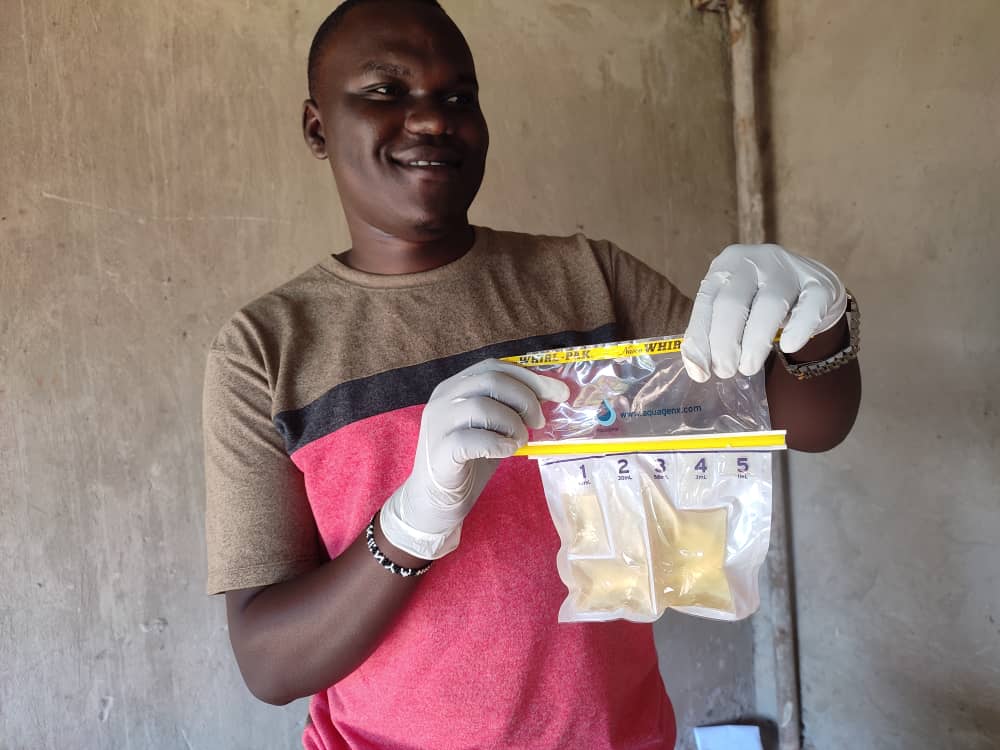
Aquagenx water quality test kits are proven, excellent tools for detection and quantification of live fecal bacteria such as E. coli. They are widely deployed throughout the world. Our test kits are simple for anyone to use, especially for non-scientists. They do not require labs, electricity, or highly trained analysts.
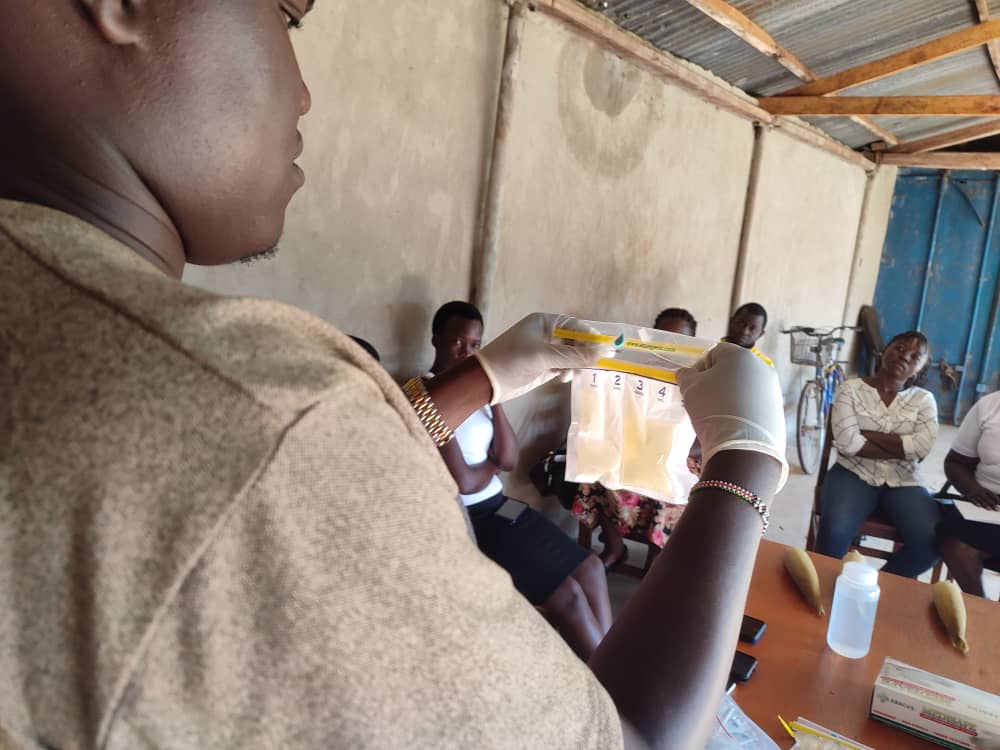 Test results are very easy to interpret, and they provide data and relevant information to make more informed decisions about the health risks of water. Our test kits are comprised of a small number of materials that are easy to carry and use in the field. Aquagenx test kits have ushered in expanded water quality testing where it was previously too difficult, impossible, or expensive, especially in low resource, rural and remote areas,
Another serious consideration for culture based testing nethods vs. new technologies is cost. Based on our experience of manufacturing and distributing water quality field test kits globally since 2013, we understand the market realities for non-profits, NGOs as well as governments in poor and developing countries. WASH budgets are limited, and water quality testing financial resources are an even smaller piece of the WASH pie.
Althought the NGO business model is evolving, it is still donor driven. If donors shift funding priorities to other global concerns such as climate change or supporting armed conflicts between nations, routine water quality testing might be reduced or even eliminated.
We also have a first-hand understanding of the realities of market economics. To provide low prices per test for customers, reliable markets must emerge to drive down production costs. With successful, transformative technologies, manufacturers must achieve extremely high volumes to lower their costs, which then allows them to lower prices for customers. This is the traditional, virtuous business cycle for all technology products.
Over the years, we have observed microbiological field testing for non-profits and NGOs is a cautious market, and technological change comes slowly. Our customers conclusively validate that our water quality test kits are on the winning side in terms of reliable technology and easy usability in the field.
However, sometimes customers must choose between doing any testing at all, or the least costly test possible, even if that means using other tests that are more difficult to use in the field, or do not provide conclusive information on microbial contamination, or do not analyze 100 mL sample volumes. Sometimes customers continue using testing methods they are simply used to using out of habit, even if these methods are much more complicated, difficult to use in the field, or expensive.
For all these reasons, NGOs and governments in poor and developing countries are unlikely to be early adopters for widespread deployment of new microbial testing methods. At their current stage of development and market demand, new water quality testing systems are models for the future, but they will likely rely on other applications and markets to drive down costs.
In the meantime, fecal contamination is likely to increase in ground and surface water sources for drinking water. This is largely due to inadequate sanitation, and the effects of climate change such as increased floods, increased droughts and resulting decreased water availability and quality in a growing number of regions.
NGOs and governments must remain vigilant in expanding routine microbiological water quality testing – and digitized live water quality data collection, analysis, sharing, and utilization – especially in rural and remote settings where testing is most needed. According to the World Health Organization’s 2022 report, State of the World’s Drinking Water, the world is not even close to being on track to meeting the 2030 SDG 6 goals.
Continuous water quality monitoring remains urgently needed throughout the world for a simple reason: water quality is never static and is forever changing. Drinking water sources experience intermittent contamination due to human and environmental factors such as heavy rainfall or flooding, poor hygiene practices, underappreciated animal sources of fecal contamination or poorly constructed boreholes or latrines.
 Microbial water quality testing must never be a one-and-done project, rather, water quality monitoring must be continuous over time. Although the world has come a long way in water quality testing since the Sustainable Development Goals were adopted in 2015, a tremendous amount of drinking water is still rarely tested for quality in poor and developing countries.
The bottom line is all water quality testing methods are needed in the WASH sector. They are critical for solving real-world water quality problems to make the best decisions from a health risk perspective and for water safety planning, now and in the future. Culture-based and molecular methods are complementary rather than competitive. Culture methods provide data on cultivable indicators tied to historical risk assessments, while molecular tools offer faster detection and broader microbial profiling. Combined use gives a fuller picture for issues such as confirming treatment efficacy or identifying sources of contamination.
Today’s customers and implementers need an arsenal of options for microbial field testing that accommodate their current and future water quality testing programs, and their available human and financial resources. One size does not fit all regarding water quality testing methods, or even national water quality standards.
Indeed, the World Health Organization Guidelines for Drinking Water Quality say, “Health-based targets, including numeric guideline values and other targets described in the Guidelines for drinking-water quality, are not intended to be mandatory limits, but are provided as the scientific point of departure for development of national or regional numerical drinking-water quality standards. No single approach is universally applicable, and the nature and form of drinking-water standards may vary among countries and regions.” (Fourth edition incorporating the first and second addenda, 2022, page 30)
If you are a WASH donor, please know the importance of ongoing water quality testing in addition to providing water access and infrastructure, water treatment and sanitation systems. Ongoing water quality testing is an imperative investment. It is as critical as the initial capital deployment of new WASH infrastructure and systems. Ongoing water quality testing contributes to the economic benefits of safe, clean water at household, local and national levels. The results are tremendous advancements in public health, education, and economic productivity that transform and save the lives of the world’s poor.