Antimicrobial Resistance and Water Quality
What is antimicrobial resistant (AMR) bacteria?
Over time, bacteria become resistant to antibiotics and no longer respond to them, which makes infections harder to treat and increases the risk of disease spread, severe illness and death. Antibiotic resistant pathogens can also share their resistance genes with other pathogens, making them resistant to antibiotics. Antimicrobials are medicines used to prevent and treat infections in humans, animals, and plants.
AMR E. coli is often very resistant to several antibiotics. A common strain of AMR E. coli is called ESBL (extended-spectrum beta-lactamase-producing) E. coli. These strains are considered critical priority pathogens by the World Health Organization (WHO).
What does antimicrobial resistance have to do with water and WASH?
AMR pathogens flow into water through wastewater systems, discharge from pharmaceutical companies, healthcare facilities, and human waste. How? When humans and animals have persistent ESBL E. coli in their gut or consume them, their infected feces can enter drinking water sources, wastewaters, healthcare facility effluent and sewerage, food crop irrigation water, other agricultural waters, poultry and other livestock production waters, and recreational waters.
Even properly functioning wastewater treatment systems may not fully remove AMR ESBL E. coli.
AMR Is a Major and Growing Global Problem
Antimicrobial resistance poses a major threat to human health around the world and impacts the human, food chain and environment sectors. AMR is a leading cause of
death around the world.
According to the WHO, antimicrobial resistance is one of the top global public health and development threats. It is estimated that bacterial AMR was directly responsible for 1.27 million global deaths in 2019 and contributed to 4.95 million deaths.
The World Bank estimates AMR could result in US $1 trillion additional healthcare costs by 2050, and US $1 trillion to US $3.4 trillion gross domestic product (GDP) losses per year by 2030.
WHO Member States adopted the Global Action Plan on AMR, which addresses the importance of a cross-sector “One Health” approach to contain this problem, namely by monitoring ESBL E. coli across the human, animal and environmental sectors. One of the major requirements of the Global Action Plan is for all Member States to develop National Action Plans on AMR, including AMR surveillance systems grounded in the One Health approach.
WHO Tricycle Protocol for ESBL E. coli
Effective monitoring and surveillance of water is needed to support prevention and control of AMR occurrence and transmission. The WHO Tricycle Protocol encourages countries and other stakeholders to monitor ESBL E. coli in environmental water samples by using a culture based monitoring method (see page 31).
Aquagenx AMR ESBL E. coli Test Kits
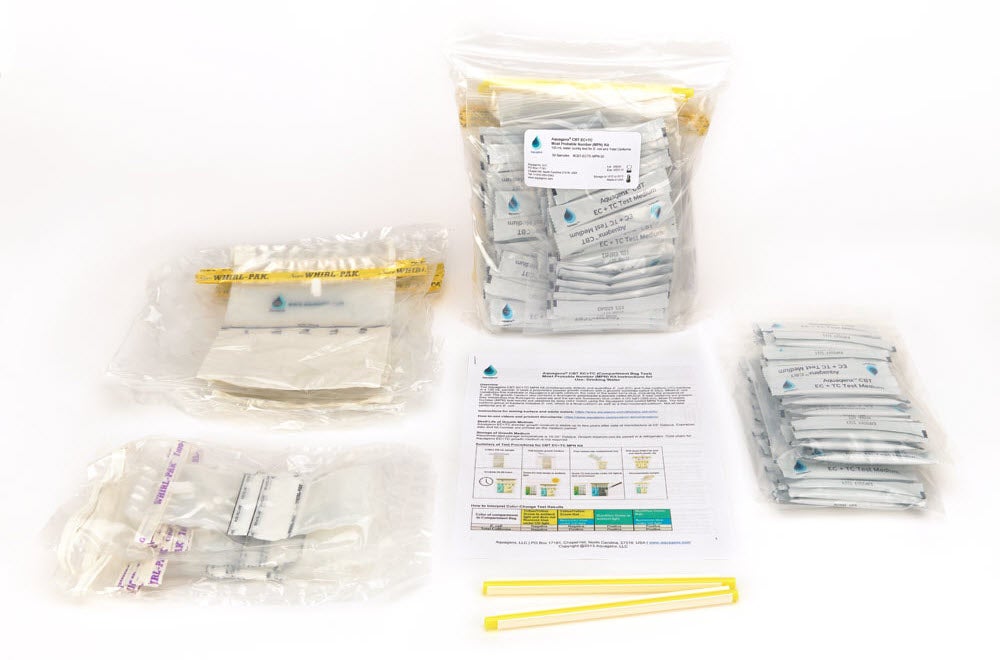
Aquagenx’s AMR ESBL E. coli water quality field test kits quantify ESBL E. coli in 100 mL samples. Test results with our kits demonstrate excellent correlation to standard culture-based methods in the WHO Tricycle Protocol.