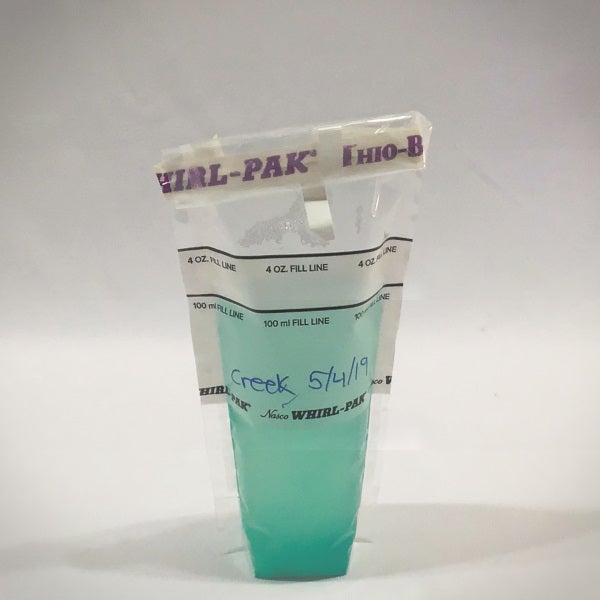
Why 100 mL Samples for Drinking Water Quality Testing
Why do the U.S. EPA and World Health Organization specify a 100mL sample of water for microbial testing, which is approximately 3.38 fluid ounces? The reason for 100mL sample volumes was determined by massive scientific and public health research.
In the first half of the 20th century, scientists studied the presence of pathogens in water that cause Typhoid Fever. Typhoid is transmitted by Salmonella Typhosa (S. Typhosa) bacteria that live in the intestines (gut) of infected people and can contaminate food and water.
These scientists looked at the ratios of coliform bacteria to S. Typhosa in water and wastewater. They also looked at the health risks of Typhoid Fever that occurred in waterborne outbreaks in which concentrations of coliform bacteria and S. Typhosa were both quantified (measured or counted). They estimated health risks and made recommendations on water volumes to analyze.
Based on this and related work, the 100mL volume became the standard volume for analysis of water sample. 100mL most likely contains the true population of bacteria in a water sample, enough to determine the health risk with high reliability. Scientists concluded that a 10mL volume is too small and might pose a greater than acceptable exposure risk to S. Typhosa. A 1,000mL volume was considered too large to be practical.
Since that time, 100mL volumes for water testing of E. coli and other bacteria have been required and mandated by the U.S. EPA and the World Health Organization. After thorough research, the 100mL sample volume provides the most accurate volume level to determine the actual health risk of drinking water for fecal bacteria and other harmful pathogens in water.
When testing for fecal contamination in drinking water, there must be a sufficient numbers of
E. coli bacteria in water samples so it is detectable in analysis. If you only use 1mL or 5mL tests - or any volume below 100mL - they do not detect enough E. coli in the relevant range to determine the safety of drinking water. A 100mL sample ensures the likelihood you will capture enough bacteria, specifically E. coli bacteria if they are present.
Using below 100mL volume tests increase the liklihood of obtaining false negative test results for Coliforms and E. coli bacteria. A false negative for bacteria in water testing occurs when a test does not detect the presence of bacteria, even if they are present in the sample.